
Treat the first session as a research problem
A mobile game can attract installs yet lose players before they understand its core loop. Analytics identify where sessions end, but they do not always explain whether players were confused, bored, interrupted or uncomfortable with a permission request. First-session research connects those signals to observed behavior and the player's own account.
Choose a narrow decision: tutorial sequence, account creation, reward explanation or store introduction. Testing all systems at once makes it hard to isolate the cause of a problem. Use a stable build and document which features are unfinished so prototype limitations are not mistaken for reactions to the intended experience.
Recruit players who match the launch audience
Screen by genre familiarity, device, language preference and recent play behavior. Experienced players may skip explanations that newcomers need. Separate native Arabic preferences from bilingual play patterns, and avoid treating Egypt, Saudi Arabia and the UAE as a single interchangeable audience.
Small moderated rounds are useful for discovering usability problems and retesting revisions. Larger samples are needed to estimate completion or compare variants reliably. If minors are part of the target audience, use appropriate guardian consent, safeguarding and age-appropriate tasks; an adult-only study cannot stand in for child-player research.
Observe before asking for opinions
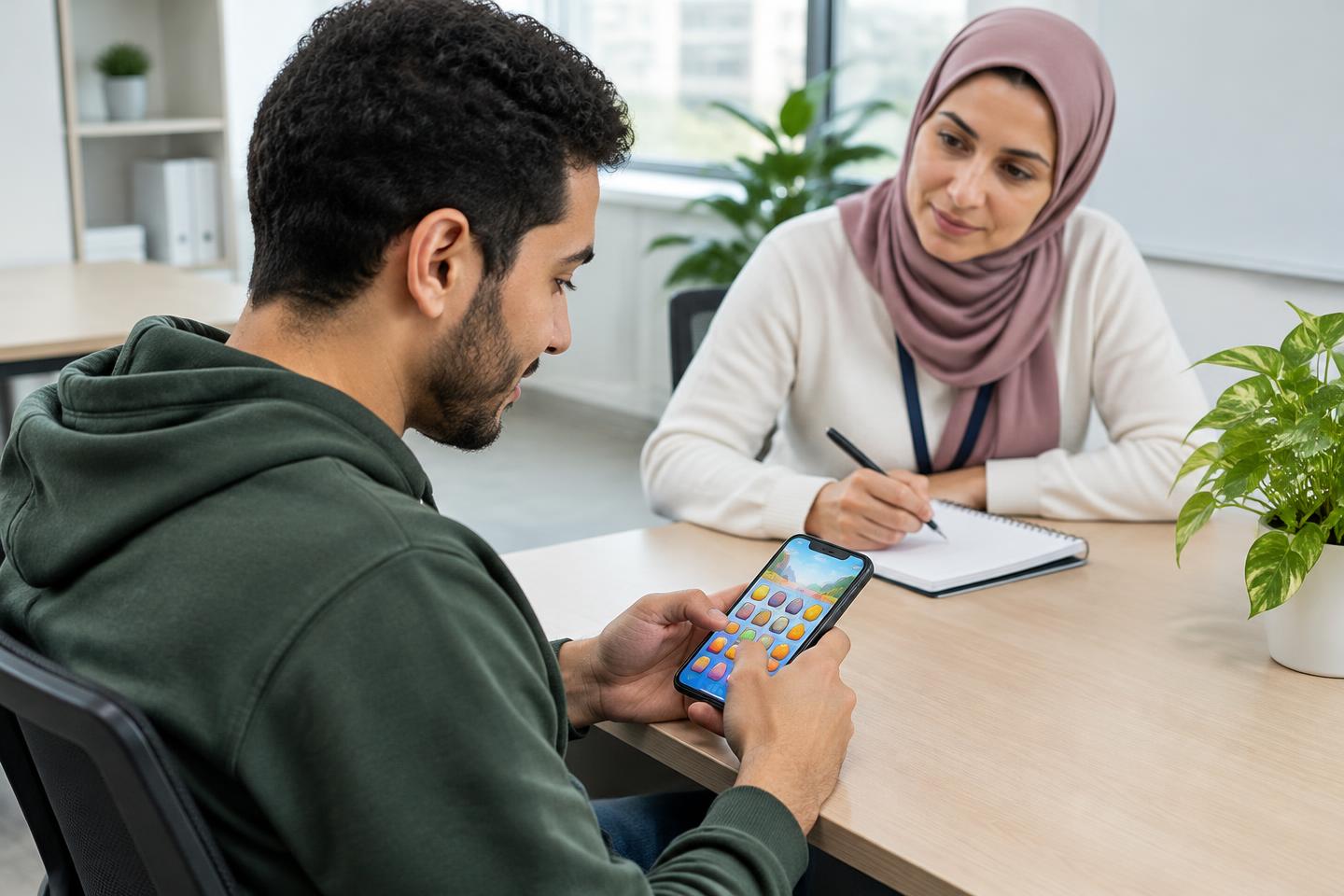
Invite players to begin as they normally would, without a moderator explaining the controls. Observe missed cues, repeated taps, accidental purchases, backtracking and requests for help. Record task completion and intervention separately so assisted success is not reported as independent understanding.
Think-aloud can reveal confusion but also change the play experience. Combine it thoughtfully with quiet observation and a short retrospective interview. With permission, capture the screen rather than unnecessary personal notifications or account information, and provide test accounts where the flow requires payment or identity details.
Test localization beyond translated words
Review right-to-left layout, mixed Arabic and Latin text, numbers, icon meaning, clipped labels and the relationship between instructions and gestures. A translated sentence can be grammatically correct while describing an action unclearly. Ask players what they believe will happen before they tap, rather than only whether the wording sounds natural.
For rewards and monetization, distinguish earned currency from paid currency and make test purchases simulated. Explore comprehension of probabilities, expiry and recurring charges when these mechanics apply. Research should improve transparency, not identify ways to pressure players into spending they did not intend.
Link playtesting findings to a measurable revision
Rank problems by severity and recurrence, then attach each to a specific screen or interaction. Retest the revised flow with fresh players to avoid learning effects. In a subsequent live experiment, keep variants comparable and evaluate retention alongside tutorial completion; a faster tutorial is not necessarily a more understandable one.
Freeminds MENA can help scope player research around a target market, language, genre and onboarding decision. A practical brief includes the test build, eligible devices, recruitment criteria and metrics to observe. The result should tell the product team what to change and what evidence would demonstrate improvement.